Sunday, 30 November 2014

Week 10

As usual, I end up getting loads of good ideas for a project when the deadline is looming. Normally I would allow myself to add more assets but seeing as the scene is pretty empty, I let this be an exception.


So I made a cool little book sign to go upstairs and help break up the columns a bit. Each one has a different word so it looks like different book sections.


Next I made some rugs (ref below) I added Ao bakes and normals to make them look less flat and added them around the level.

I think it helps to break up the boring wooden floor.

Next on my to do list was to create a counter to go at the back of the shop where the cauldrons are.


Whilst I was doing this I thought I should make another book pile to go on top.


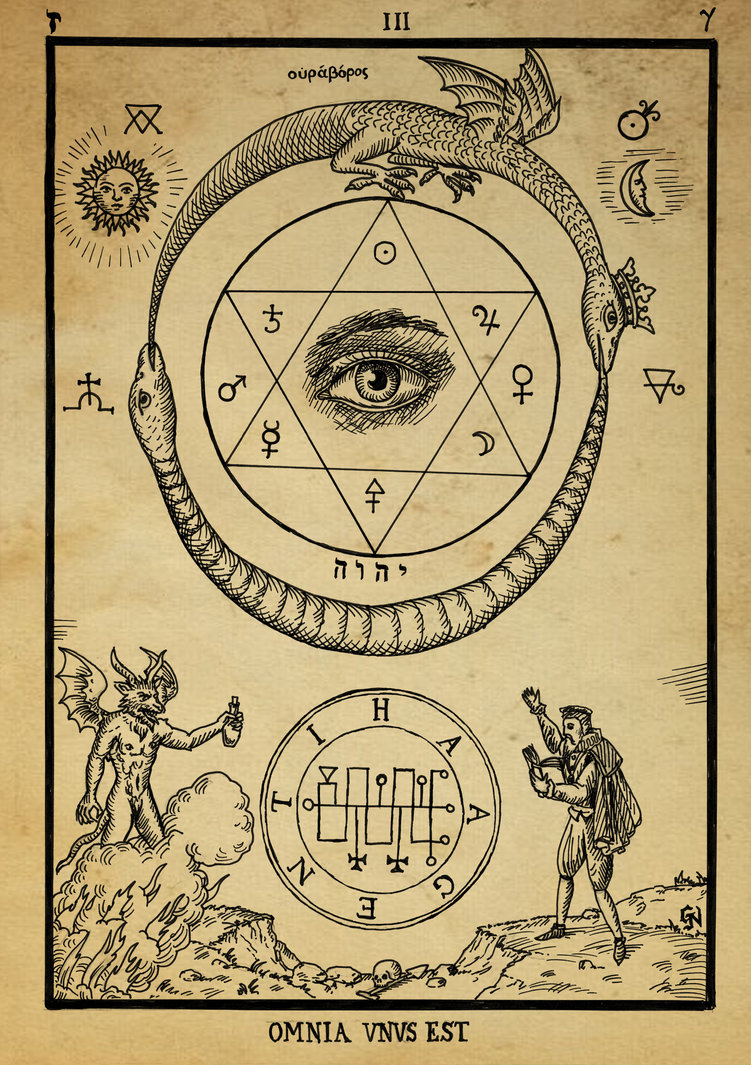
I ended up using ncloth to create some pages to drape over a few books and the side of the desk. I really enjoy doing cloth simulations so I thought I'd do another for the stairs to add a bit more to it. I then had to get some images to put on the pages (ref below). Then came more book placing, everywhere.


AO shots are so nice
I also made a half side table from the larger ones downstairs as you can see from above and a candle with a new flame particle (that doesn't have lens flare!)

I re-visited the book textures so it didn't look at childish


I still have the different colours and the version without the metal binding on the spine.


Some little plant alphas to break up the bookcases. The middle one is inside a shrunk cauldron and the others are in a plant pot I made weeks ago but forgot to mention. Ref below.


Rug Texture ref -
http://alrug.com/rugs/gallery/product/images/9323
http://www.finerugsandmore.com/sites/default/files/rugImages/Nourison%202000%202318-SLT_0.jpg
http://briers.ca/store/images/detailed/15/050301-65186-3060-kelati-persian-carpet-black-made-in-belgium.jpg
http://www.wonznews.com/surfaces_broadloom_2010/high_resolution_images/Shaw_Coventry.jpg
http://indulgy.ccio.co/19/KD/h5/61iYUF0lNfL.jpg

Page images ref -
http://www.rosecitypsychic.net/wp-content/uploads/2014/02/alchemy_woodcut_duos_caputis_melior_quam_unus_est_by_dashinvaine-d62i1y6.jpg
http://www.cvltnation.com/wp-content/uploads/2014/10/alchemy_woodcut_omnia_unus_est_by_dashinvaine-d62hzol.jpg
http://aetherforce.com/wp-content/uploads/2014/06/alchemy_woodcut_terebilis_est_locus_iste_by_dashinvaine-d62i0xe.jpg
http://twistedphysics.typepad.com/.a/6a00d8341c9c1053ef0134853a9cb8970c-pi

Plant Alphas -
http://www.cgtextures.com/texview.php?id=24806&PHPSESSID=ud42de4lp1jq2sn38lr6s3rdm6
http://www.cgtextures.com/texview.php?id=24784&PHPSESSID=ud42de4lp1jq2sn38lr6s3rdm6
http://driverlayer.com/showimg?v=g&img=http://s.hswstatic.com/gif/sage-herbal-remedies-1.jpg&org=http://health.howstuffworks.com/wellness/natural-medicine/herbal-remedies/sage-herbal-remedies.htm&ti=Ltd.%20Sage%20can%20be%20used%20as


Saturday, 29 November 2014

Week 9 - Post Alpha


First thing I did after alpha was delete all the lanterns and the flame particle. I also turned off lens flare in the world editor for good measure.

Unlike my previous priorities, I began with the stairs as I knew from making them the first time, just how long it would take. Jon had organised a few late night lab sessions so on the first one I did the stairs.

Left is original, right is re-do

First thing I went about tidying up the main section of the stairs. I deleted the original and just re-made it from scratch. I added bevels and more geometry so it would have a softer look to them and not be as angular. I smoothed a lot of edges.

Left is new, right is old

Fun fact, the stairs were floating during the alpha cinematic. I did't realise this until I went in my scene after to decide what to do next. I'm unable to lower the stairs as everything lines up, so I added an extra step on the bottom to make it curve out more. I didn't remake this section as there's not that much wrong with it. I cleaned up some of the geometry and added bevels and smooths to the steps.

Left is old, right is new
It was the same case for this part of the stairs and was easier to add bevels and clean the geometry instead of completely remaking it.

I made a little cross for some details to go around the stairs and on the skirting trim that surrounds the hole in the floor.

Using this image I found (ref below), I modelled and placed it around the wooden skirting. Unfortunately, it looked a lot like the Iron Cross from far away (Possible WW1 crossover?!) so I rotated it 90 degrees and it looks a lot better now.


Using NDO, I made the texture maps and came out with a really nice golden trim for the crosses (see above). It's just a shame this small metal detail won't reflect as much as I'd like as there isn't direct light like that shining on them. But it's a good way to show off my use of PBR.

Left is old, right is new
The main change I made to the stairs was this skirting I added around the edge. It really helps show the smooth curve the stairs flows in and it looks a lot smoother than the little beam I had there before. It also provides enough space for the cross details to go.


Crosses on the skirting 

Cross image ref - http://www.needlenthread.com/Images/patterns/Ecclesiastical_Embroidery/Crosses/Cross_Pattern_10.gif


Friday, 28 November 2014

That lens flare - Alpha Feedback


I did my alpha on Tuesday (25th). Here is the cinematic for it:


My feedback was a bit mixed. As I knew it wasn't ready for alpha it was just mainly areas I needed to improve on. But my cinematic was good and served as a good solid start for the final one. The scene was a bit empty so I need to fill it out some more. Turn off the lens flare is a must!

Areas to improve on:

  • Lighting
  • Dynamics
  • Time management
  • Refining some models
I recently bought Quixel suit so this will help me improve my textures greatly for the final cinematic 

Tuesday, 25 November 2014

Week 8

Run up to Alpha time! Busy, busy.
The worst part of this week was the little arches that go along the bannister up the stairs. I had no idea how I was supposed to go about this. Even look at ref images, there wasn't any photos of the steep parts on the bannister, mainly because it's in a part no one can really reach. But the fact I pretty much had to wing it didn't help.


I began by mirroring one arch so I had quite a lot lined up and then had to scale it on the Y slightly so it wouldn't be too short. After positioning it at the bottom, I selected the arch faces and separated them from the bottom poles. It was then just a case of rotating them to fit with the bannister.

After, I just had to rotate and place the poles so it would line up and I could re-attach them. I probably could have done this another way so it didn't look at bad and maybe there is an easier, quicker way to do so, but I couldn't really think of one at the time.

At least I had known that the stairs would take me a long time. Especially with the uving and lightmapping. But it was done and in Unreal. I brought an image of the stairs in to Photoshop and colour picked the steps so I could have that brilliant pink colour. It looks like that part of the stairs is some kind of plastic rather than carpet so I added a constant to sort out the specular value in Unreal and added a wooden texture on to the rest.

Next on the asset list was the column that breaks up the bookcases. Couldn't find too many reference images once again as there were either books in the way, or no one was interested. Using the lower and upper bookcases and the ceiling out of engine (Just for reference) I modelled the shape and the individual detail shapes before placing.
 
I made the decision to not bake these details down as when I tried it, the details were just lost and I personally thought it looked really bad, so I just kept the mesh as the poly count wasn't that high and those sort of things don't really matter any more. I originally didn't have polys on the back of this piece, but later on I realised light was passing through so I came back and added. 

Just for alpha, it was a case of putting a wooden material on that I would later change.


I admittedly forgot about the roof. Again using fbx exports from Unreal for scale reference,  it came out pretty quickly. But I had to decide what sort of details I was going to have on the roof.

Looking at the ref image on the left, it's incredibly detailed along with a stained glass window. I judged how much I had left to do (a lot) and whether I would be able to do something that detailed. For alpha I knew it wouldn't be achievable, so I decided to see what feedback I got first and then see if I would have time to create something more detailed. It's a shame I never got a chance or time to add more detail here but it can be something to aim for over the Christmas break. 

I did a quick search at gothic houses and saw that wooden rafters seemed kind of popular. So here is how the final roof came out. I have space for the stained glass window but I would achieve that through textures anyway.


Next came a flame particle that I wanted to use to light the scene. I used kismet in UDK to create fire before I kind of knew what I was doing. Even so I watched this quick tutorial on how to make a flame particle just so I would know what I was doing in Unreal. https://www.youtube.com/watch?v=KEzg5g9ikds

When creating the final matinee, the god awful lens flare that came off the flame particle wasn't as extreme as it was in the alpha cinematic. By that point it was too late to change and even then I changed the lighting afterwards anyway. 

After placing around the flame particle
The flames weren't really doing their job properly but I didn't have much time to change as I needed to texture everything else.

I used the wooden texture from CG textures (ref below) on everything wooden, bookcases, stairs, bannisters, upstairs bookcases, columns. The tables just had a brown albedo with the AO on for the time being. the Lanterns had the same texture as the cauldrons as I thought that black metal looked ok and the downstairs windows had a translucent constant on as I was still trying to create the frosted glass effect.

The carpet upstairs (ref below) I edited to be blue and would later make a normal etc.


GC texture wood ref - http://www.cgtextures.com/texview.php?id=19797&PHPSESSID=ud42de4lp1jq2sn38lr6s3rdm6

CG carpet ref - http://www.cgtextures.com/texview.php?id=8242&PHPSESSID=ud42de4lp1jq2sn38lr6s3rdm6


 -

Wednesday, 12 November 2014

Weel 6/7

I had my Alpha scheduled for week 8 so I thought I should probably get the stairs finished and then start assembling more assets in Unreal, creating textures and having the lighting sorted. Needless to say I'm a bit behind schedule.

I imported the ceiling and upstairs bannisters in to the stairs Maya file so I could make sure it would bit in the right place. Using my Pinterest board, I counted how many steps there were of the bottom half. It took me a while to get this right as when you look at the stairs head on, it's misleading as you can't really tell where the curved part of the stairs begins. Eventually I managed to count 9 for the straight part before curving. I was incredibly awkward trying to shape the highlighted section of the stairs in the left image.


The bottom half of the steps curve outward and then they gradually curve inwards. I couldn't quite get the strange arch type shape the curved bit was.


In the end after adding edge loops to a cube and moving around the edges. It ended up with some pretty nasty topology as well. I decided to keep going and then come back to this part if I had time.


From the division plan I had made, I made one side of the circular part of the stairs before mirroring it over. This section was equally as annoying to make as it had to fit with the lower part's curve flow. So I again added loop edges to a cube and extruded the stairs up and around so it was all one piece. Again I made sure to count the number of steps so it would be as accurate as possible. Due to the number of stairs though it was a bit awkward trying to get the curve right as well as the rough step width/depth.


The final set of steps didn't get any easier. I used the scale model to make sure the steps weren't too tall but modelling against this, the number of steps and where the start of the first floor began, it was awkward. Especially because of the shape it wasn't a walk in the park.

Looking back at this, I think it could have been done better using curves, that way I could have gotten the nice flow of the steps easier and they might have been less 'blocky'.

 Using a top down photo of the stairs, I created a curve that followed the shape to create the skirting that went alongside the stairs. Then once in place, I moved the stair verts to align with the skirting. I think this helped improve the flow of the stairs slightly and it didn't look as 'blocky' and it started to resemble the reference images (From top down anyway).

I had to next duplicate the skirting up to act as the bannister and align it with the bannister around the balcony railings on the first floor so I knew roughly the height.


Again I took a little break from the stairs to get the end walls done. On the right is how the upstairs and downstairs looks. Seeing as they're similar, I decided to be modular and just model one version.


To save myself from having to model stuff for the outside, I thought it would look quite nice to have frosted glass. I had a go at using some diferent photoshop brushes to create a 'icy' looking white glass that I could use as an alpha for the windows. Annoyingly, there seemed to be a problem with Unreal dealing with transparency so the end result looked pretty awful.


I chose to keep this in for alpha so I could explain what I wanted to do with it and just show where it was currently at. I also added a base wooden texture for alpha.


Cg texture ref - http://www.cgtextures.com/texview.php?id=19797&PHPSESSID=ud42de4lp1jq2sn38lr6s3rdm6

Saturday, 1 November 2014

Week 5/6

This week was about more small props than anything and getting what I'd modelled UV'd. Firstly, I wanted to replace the floor for an fbx rather than the UE4 bsp.

I'd recently joined Pinterest and decided to use it as the main source of my reference images.

It's a great way to have a 'wall' of images that you can just scroll through and have all in once place. It's definitely a process I will carry over to other projects. Not a lot of people who visit the shop take photos of anything but the stairs so it took me a while to find the image on the left, but luckily I did.

The floor in the shop has a little track that a cart follows (to return books I assume?) It looks like it comes from the front door and then down the left side of the stairs and ends at the back of the shop. I decided to implement the pattern as it seemed to fit in with the gothic style but I wouldn't be having a cart, even if it is quite a cool aspect.

Using the door model I had from block out and the scale model, I centred a plane for the pattern section and then had 2 planes either side for the normal flooring. I decided to have the floor in sections so I could have better resolution for the floor.


PBR wise, this was my first attempt at it. I kind of understood what it was about after looking at the Unreal Engine documentation (Link at end) and the lecture Jon gave us about it. I created the base albedo for the flooring, used xNormal for the normal map and then took it into UE4. Even though I had used Unreal breifly over the summer, I had only glanced at the material editor. Luckily it's pretty simple. After plugging in the albedo and normal, I tried playing around with constant values for the specular, so I could get a better idea of what the differences were between values and how it would affect the texture. I figured it would be a good way of not wasting time creating maps to use a constance for some attributes, but only in the case if the texture has one material. Like with the standard floorboard panel, it's just wood and could probably look okay with having a constant rather than a specular map (I made one anyway though for good practise). Whereas with the patterned panel, I wanted the pattern to be matte rather than have any shininess to it, so in this case it would require a specular map which had different values.  


In Engine shot of the floor w/ textures

Next up was the cauldrons. I wanted these in my scene as I think it's a good asset to use particles with (steam, bubbles etc) and could help bring some dynamics to the scene. 

Here are the 2 types I made, although thinking back I should have probably made more for variation. (I did plan on making more but ran out of time)  From looking at films and Halloween props online, the closest texture I could think that would give off the look I wanted, was plaster. Still smooth but had that slight bumpiness to it. So using a plaster texture (Link Below) I edited it and came out with a nice looking albedo for the main part. I also made a simple gold albedo for the stand for the one on the right. The stand has a different texture in Maya so in UE4, I can add the metalness, spec and roughness.


I like how this material turned out and it looks quite nice on the cauldrons in engine.


Whilst I was modelling the cauldrons, I thought the stand could be re-used for a crystal ball. I moved them in slightly so the ball had something to rest on. The bottom left corner is a shot in Maya and the larger image is in Unreal. I made a smaller ball on the inside so I could place a glass outer to improve the look.

I reused the brass values from the cauldron base but changed the albedo colour slightly with a constant3vector to make it more gold rather than brass.


I think it's worth mentioning this website I used to find specific colour values. Encycolorpedia (link below) You just search the colour you want, eg. for the image below, I searched gold (for the crystal ball stand) and it gives you loads of options and information that you can copy straight in to photoshop or Unreal. I've used this website for quite a few colour values for my textures.

For the actual ball material, I wanted a flowing fog effect similar to the one in the Divination classes from Harry Potter (left). When creating my RTE map, I had a flowing fog from the content browser that I edited the speed of and it was the same sort of I thing I wanted, but contained. I knew that particles wouldn't be very good as I think the collision doesn't work on other objects (?), either way I thought it would be best to create the effect in the material.

If I created a tile-able cloud texture, I theoretically thought that I could just make the texture scroll along an axis and that would have the effect I wanted.

I looked through the nodes in the martial editor just to see if something would catch my eye and I found 'panner' under coordinates. I changed the speed on the X & Y and it came out how I wanted. I then made a few colour variations and applied it to the model in the viewer. I had a UE4 glass material on the outer ball, but with the cloud effect underneath, I didn't think it looked very good so I deleted the inner ball and had the clouds on the outside.


Unreal Engine PBR - https://docs.unrealengine.com/latest/INT/Engine/Rendering/Materials/PhysicallyBased/index.html

CG Texture Ref - http://www.cgtextures.com/texview.php?id=33550&PHPSESSID=ud42de4lp1jq2sn38lr6s3rdm6

 - http://www.cgtextures.com/texview.php?id=16517&PHPSESSID=ud42de4lp1jq2sn38lr6s3rdm6

Encycolorpedia - http://encycolorpedia.com/ffd700

Crystal Ball ref - http://nogwarts.blog.cz/1307/kristalova-koule